

sites

Enys Gardens
Penryn, Cornwall, TR10 9LB
Sightings of Dragons at the Enys Estate go back as far as the 1700’s, with multiple reports from the Head Gardener of the kitchen garden being raided by large winged birds.
It wasn’t until 1888 with the first un-refuted photographic evidence of Dragon’s existence that Dragons were officially recognised as seasonal residents at the Enys estate. The special micro-climate and diverse habitat provided perfect conditions for the first Dragons to take up residence during their egg laying season.
Today Enys still provides a safe incubation habitat for over 12 Dragon species,
largely thanks to the continued efforts of the Enys gardeners and the local C.D.C.S. members.
The Dragons return annually to lay their eggs between the Vernal Equinox and the Pink Moon, remaining for three weeks before flying off to their preferred feeding grounds.
The Dragon’s presence original angered the gardeners and the Enys household as they believed the Dragons persistently raided the kitchen garden and orchards.
However, it is widely accepted that over 60% of Dragons are in fact Gastroliths (consuming minerals and ores), whilst the remaining species consume fish, seafood and metals. There are only two species of Dragon who eat fruit and vegetables.
Contrary to popular belief, dragons do not eat humans!
Like us on Facebook
Follow us for updates


Eden Project, Cornwall
Bodelva, St Austell, Cornwall
Dragons have been living in Cornwall for Millennia. The warm microclimate and abundance of sea creatures and mineral ore in the subterranean homes means that the population of dragons in recent years has increased dramatically.
In 2015 the Operation Dragon Egg (O.D.E) programme was established, a conservation partnership between the Cornish Dragon Conservation Society and local landowners to develop the first Dragon rearing facilities at Enys Gardens, Cornwall.
In the 10 years since, this programme has proved to be an essential tool for increasing Cornish Dragon populations and protecting vulnerable Dragon hatchlings from their biggest threat, Human poachers and the effects of climate change on their native delicate habitats.
In 2026 the O.D.E programme is expanding their conservation efforts and the C.D.C.S is linking up with the worldwide Dragon Conversation Society to expand their conservation efforts to include worldwide dragons with the first International Dragon Rearing facilities here at Eden Project ,Cornwall. Without this conservation intervention, only a mere 5% of the worlds most vulnerable Dragon Species in tropical and temperate regions would reach breeding age in the wild – a humbling statistic!
Thankfully, through the expansion of the O.D.E programme an incredible 65% of native Cornish Dragon Species go on to reach adulthood.
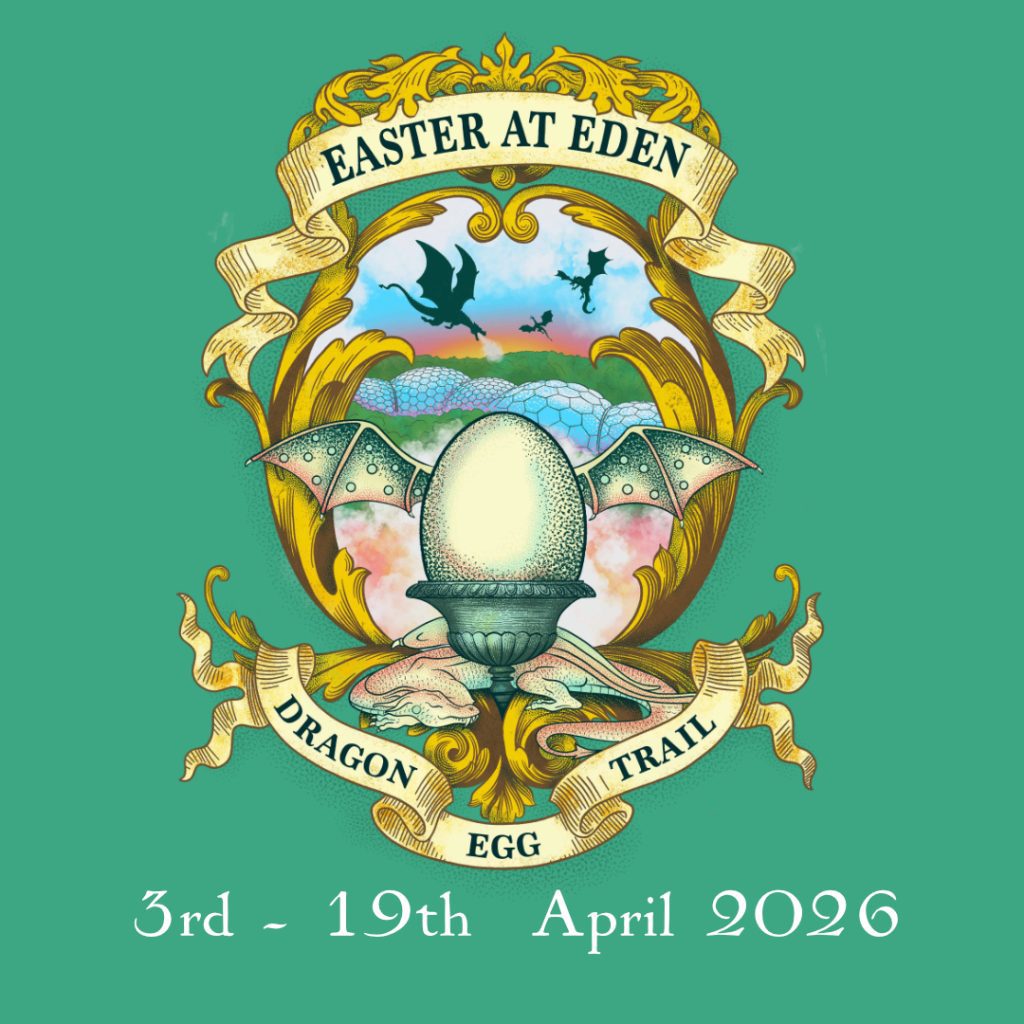
Visit the Dragon handling facilities at Eden Project this Easter and learn about our beautiful native species of dragon and international species.
3rd - 19th April 2026
Past Trails

Painswick Rococo Garden
Gloucester Rd, Painswick, Stroud
Dragons have been long associated with the Rococo gardens.
The well kept vegetable gardens have been a favourite for the dragons who favour Vegetables as their preferred diet.
The dragons residing in the Rococo gardens appear to have a eye for the finer things in life. Similar to behaviours commonly associated with magpies, the dragons borrow ( steal) beautiful shiny and expensive items which have been carelessly left in the outdoors ( you have been warned) with which to create their nests.
A point of difference from their Cornish Cousins, the Cotswolds dragons seem to prefer a diet of vegetables, crustaceans and in some rare instances, sheep.
The Dragons in the Cotswolds are largely nocturnal, favouring the bright (candle) lights of the early evening to galavant around the gardens in search of food, and ultimately their future mate.
Once again the dragons prefer the Vernal Equinox and the Pink Moon with which to nest and raise their young. They remain for three weeks before flying off to their preferred feeding grounds in West Ireland for the summer months.
Like us on Facebook
Follow us for the latest updates